Modern Waste Incineration Comparative Review: HICLOVER Waste Incinerator Systems, Technical Standards, and Global Use Cases
1. Introduction: Meeting Stringent Industrial Standards for Reliable Medical Waste Disposal
In high-stakes environments, the waste incinerator remains the cornerstone for compliant, safe, and efficient treatment of hazardous refuse. For facilities prioritizing engineering reliability and regulatory adherence, HICLOVER’s portfolio exemplifies current benchmarks. Systems such as the incinerator for medical waste disposal are engineered to meet medical incinerator operating temperature standards, commonly spanning 850°C to 1200°C in the primary and secondary chambers—parameters critical for full pathogen destruction and volatile organic compound breakdown. These units are designed to consistently deliver within these ranges, with precise temperature retention guaranteed via automated PLC controls, ensuring reliability in daily operation and in crisis-response scenarios.
2. Informational Layer: Technical Foundations and Regulatory Compliance
2.1 High-Temperature Dual Chamber Combustion
- Technical temperature standards: Leading medical incinerator designs maintain secondary chamber temperatures at a minimum of 1100°C to align with WHO, EU directives, and local emissions mandates. This ensures complete oxidation of hazardous organic substances, rendering the output gases compliant with global health and environmental regulations.
- Combustion principles: The dual-chamber system—core to every HICLOVER unit—enforces staged combustion. The first chamber rapidly volatilizes waste, while the secondary chamber ensures total combustion, eliminating dioxins, furans, and infectious agents.
- Retention time: Industrial protocols stipulate a minimum of 2 seconds gas retention at maximum temperature in the secondary chamber. This is vital for both small scale medical incinerator units and large fixed installations. It’s an area where engineering precision directly influences environmental and occupational safety.
- Regulatory references: HICLOVER designs directly respond to frameworks such as EU Waste Incineration Directive (WID) and United Nations Environment Programme (UNEP) guidelines. For professionals comparing medical incinerator from China with European and American alternatives, documentary compliance, emission monitoring ports, and automated record-logging are integral to audit-readiness.
2.2 Scrubbing and Filtration: Emission Control for Modern ESG Demands
- Dry vs Wet Scrubber: Facilities can select between rugged dry scrubber modules or comprehensive wet scrubbers, depending on application and local air quality mandates. Dry systems minimize water usage and are ideal for decentralized or resource-limited sites; wet scrubbers offer optimal particulate, acid gas, and mercury removal for stringent emission reduction.
- Air filtration: Technologies such as auto-roll air filters—available on select HICLOVER models—further lower particulate discharge, supporting ESG compliance. These engineering choices are increasingly pivotal as carbon emission reduction pressure grows, particularly in urban, mining, and humanitarian deployments.
2.3 Automation and Digital Control: PLC Integration
- PLC vs Manual Control: Advanced PLC systems deliver precision, repeatability, and remote diagnostics—a critical advantage during global infectious disease preparedness efforts, where operator exposure must be minimized. Manual override functions remain for maintenance and contingency, but digital automation enhances plant up-time and safety.
- Data logging: Compliance audits and continuous improvement initiatives are supported by integrated digital records of temperature, cycle time, and emission performance.
3. Commercial Investigation Layer: System Design and Field Application
3.1 Comparing Incinerator Types: Fixed, Containerized, and Mobile
- Fixed installations: Large hospitals, laboratories, and municipal waste hubs benefit from stationary HICLOVER incinerators, engineered for high throughput and continuous operation. These units are typically integrated with site-specific emission abatement systems and are ideal for centralized waste streams.
- Containerized modular systems: For regions with shifting waste volumes or limited infrastructure—such as remote mining/oil camps, disaster response, and humanitarian field hospitals—containerized solutions shine. HICLOVER containerized incinerators arrive pre-wired, pre-plumbed, and factory-tested, reducing on-site commissioning risks. Their mobility is a game-changer for decentralized waste management across emerging markets, including Angola clover medical limited china, Sao Tome and Principe incinerator italy, and Gambia medical incinerator design projects.
- Mobile plug-and-play designs: Fully mobile systems—trailer-mounted or skid-based—enable rapid deployment. These support critical scenarios where waste must be destroyed at source, e.g., outbreak zones, border posts, and field laboratories.
3.2 Chamber Volume and Scaling: From Small Incinerators to Large Capacity Systems
- Small incinerators: Compact HICLOVER units with batch capacities of 10–50 kg/hr cater specifically to small clinics, veterinary sites, and pet crematory equipment operators. Fast heat-up times and simple controls allow for safe operation even in resource-limited settings.
- Scalable solutions: Customizable chamber sizes accommodate the needs of multi-bed hospitals, industrial parks, and large-scale animal processing facilities. Engineers can specify chamber volume, fuel type (diesel, LPG, natural gas), and emission control modules to align with budget and compliance risk.
3.3 Application Scenarios and Use Cases
- Medical and laboratory waste: Hospitals require systems that handle anatomical, infectious, sharps, and pharmaceutical waste streams, maintaining segregation integrity from loading to ash discharge.
- Animal and pet cremation: Veterinary clinics and animal shelters frequently deploy HICLOVER’s pet crematory equipment. These units combine high-temperature reliability with afterburner technology, ensuring odor control and community acceptance.
- Cris zones and humanitarian camps: Mobile and modular solutions are routinely deployed by NGOs and emergency response teams, especially where infectious waste must be destroyed on-site to prevent disease transmission during outbreaks or disasters.
3.4 Engineering Experience and Factory-Direct Advantages
- Factory direct supply: HICLOVER’s vertically integrated manufacturing approach guarantees stable supply chain integrity and quality control—key differentiators compared to trading companies that may lack direct engineering oversight.
- Custom engineering support: Decades of field experience allow HICLOVER to offer tailored solutions, rapid prototyping, and responsive technical support across global markets.
4. Transactional Layer: Procurement, Customization, and Export Capabilities
4.1 Factory Direct Manufacturing and Customization
- Chamber volume options: Engineers can specify loading capacity, burn rates, and chamber design to suit local regulatory and throughput needs.
- Multi-fuel flexibility: HICLOVER waste incinerators accommodate diesel, LPG, and natural gas, supporting deployment in regions with variable energy infrastructure.
- Optional modules: Wet and dry scrubbers, automatic loading, and energy recovery systems are offered for projects prioritizing carbon emission reduction and operational efficiency.
4.2 Global Export and Logistics Experience
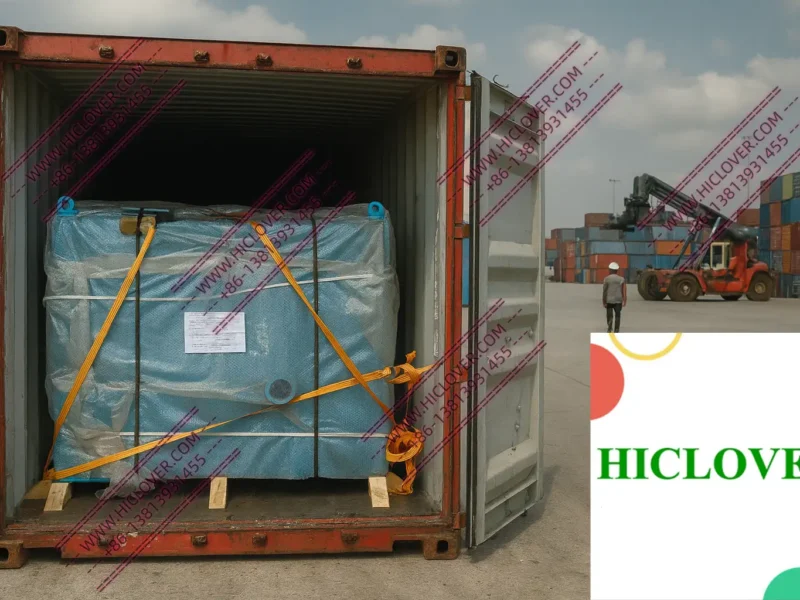
- Worldwide export: HICLOVER ships fully crated, ISO containerized units globally, supporting diverse deployments from medical incinerator from China to complex projects in Africa, the Middle East, and Southeast Asia.
- Engineering documentation: International buyers receive detailed O&M manuals, regulatory compliance certificates, and installation support tailored to local norms.
- Rapid commissioning: Plug-and-play modularity, factory pre-testing, and remote support minimize downtime and field engineering risk.
4.3 Supply Chain Resilience and After-Sales Support
- Stable component sourcing: Proprietary supply channels and local stocking where feasible ensure uninterrupted access to critical spares—including burners, PLCs, and refractory.
- Remote diagnostics: Modern HICLOVER systems support remote monitoring and troubleshooting, a major asset for decentralized operations and remote mining/oil camps.
5. Comparative Results: Practical Outcomes and Industry Trends
5.1 Emission Control and ESG Performance
- ESG compliance: Advanced scrubbing and automation support not only emission reductions but also transparent reporting—critical as investors and regulators place increasing emphasis on environmental, social, and governance metrics.
- Energy recovery: Select HICLOVER models integrate heat recovery systems. These recapture waste heat for facility use, optimizing operational energy efficiency in line with modern cost and sustainability demands.
5.2 Field Deployments: From Small Clinics to Complex Multinational Projects
- Decentralized waste management: Distributed HICLOVER small scale medical incinerator units enable clinics and field hospitals to process waste at source, reducing transport risk and supporting local health infrastructure resilience.
- Large-scale engineered projects: Multichamber, high-capacity incinerators with PLC automation are incorporated into infrastructure for urban hospitals, laboratories, and even military installations, as seen in collaborations with Angola clover medical limited china and Sao Tome and Principe incinerator italy.
5.3 Knowledge Sharing and Regulatory Updates
- Technical knowledge base: Continuous alignment with global best practices is essential. Engineering professionals are encouraged to reference technical search queries such as medical+incinerator+secondary+chamber+temperature+standard for the latest updates on secondary chamber requirements.
- Stakeholder engagement: Hospitals, NGOs, and industrial operators benefit from HICLOVER’s technical support network and open documentation policy, reducing barriers to compliance and best-practice adoption.
6. Conclusion: Engineering Certainty in a Rapidly Changing World
Across hospital, laboratory, animal processing, and emergency scenarios, HICLOVER waste incinerators represent a technically robust solution, engineered to meet the shifting requirements of global waste management. Advanced combustion controls, modular deployment options, and factory-direct support combine to address the complex intersection of compliance, operational continuity, and environmental stewardship. In an era where ESG, supply chain resilience, and infectious disease preparedness are non-negotiable, engineered systems with proven track records—such as those detailed at https://www.hiclover.com/—provide the reliability and flexibility modern industry demands.